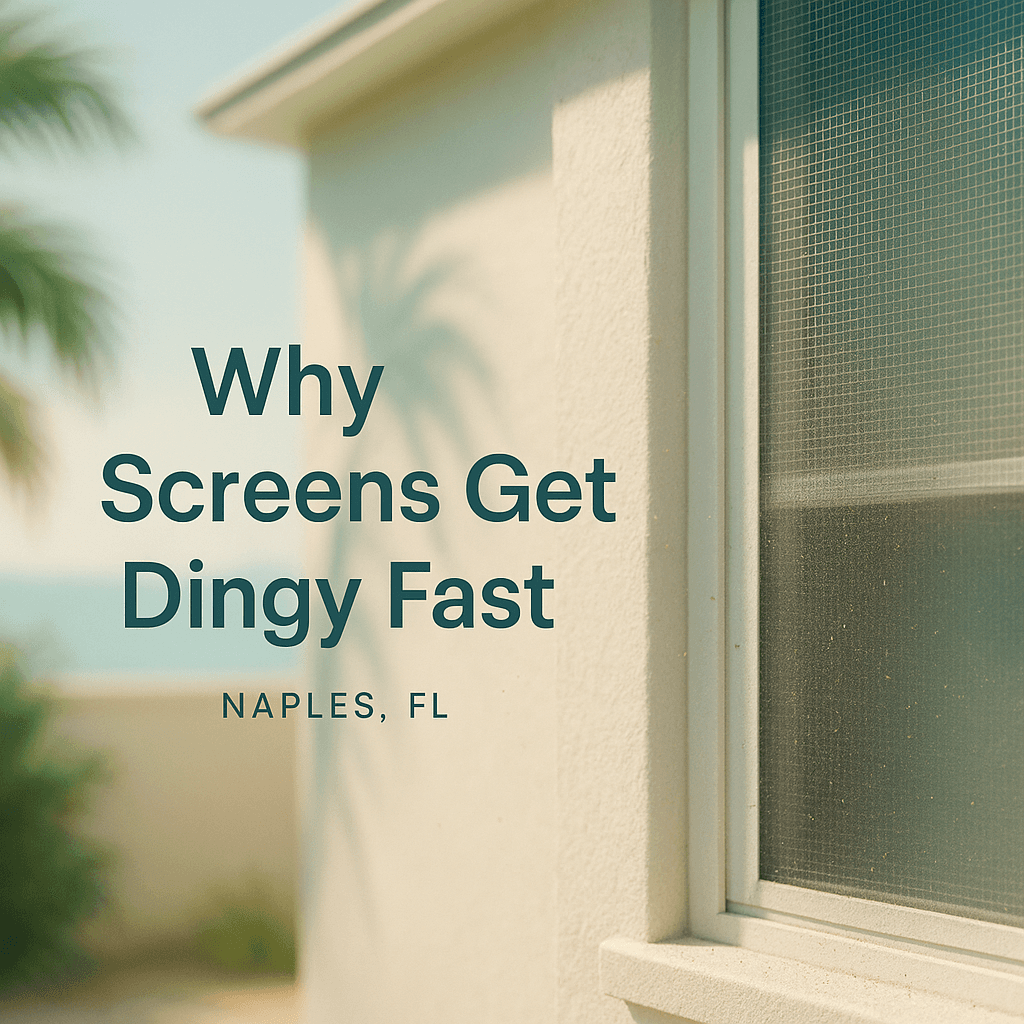
If you live in Naples and you feel like your window screens go from “clean enough” to “why do they look gray already?” in no time… you are not imagining it.
Screens down here get dingy fast. Like, a couple weeks fast sometimes. And yeah, you can rinse them. You can wipe them. You can even replace a few and swear you will “stay on top of it” this time.
Then the cycle repeats.
So what’s actually going on?
The #1 reason Naples screens get dingy fast
It’s the sticky cocktail of humidity and airborne particles that basically glues itself to your screens.
Not just “dust.”
I mean:
- salt and minerals in the air (especially anywhere near the Gulf)
- pollen that never fully takes a season off
- road grit and exhaust film
- landscaping debris (tiny chopped leaf bits, mulch dust, soil)
- mold and mildew spores that love warm, damp surfaces
- insect residue (yep, it’s a thing)
And the real kicker is the humidity. Humidity makes screens act like a tacky filter. Stuff hits the screen, gets slightly damp, and instead of blowing off later, it holds on. Then it builds. Then it darkens. Then it turns into that dull gray film that makes the whole window look worse.
Even if your glass is clean.
Even if your house is spotless.
Even if you just cleaned the screens “recently” but not recently enough for Naples.
Why screens show it before your windows do
Here’s the frustrating part. Screens are literally designed to catch stuff.
They are a mesh filter sitting out in the open, taking the full hit from:
- wind
- afternoon storms
- irrigation overspray
- coastal air
- traffic dust
And because the mesh is textured, that grime wedges into the little corners of the weave. It’s not like glass where a squeegee pass can make it look brand new. Screens trap.
Also, the dirt on screens reads as “shadow” from inside the house. So you may look out and think your windows are dirty, when it’s actually the screen dulling the light.
The Naples mix that makes it worse
A lot of places have dust. A lot of places have humidity. Naples has a specific mix that’s just… relentless.
1) Salt air and mineral haze
If you’re west of 41, or even if you’re not but you get those onshore breezes, you get more salt in the air than you think. Salt attracts moisture. Moisture helps dirt stick. It’s a team effort.
2) Pollen plus moisture equals paste
Pollen by itself can blow away. Pollen plus humidity becomes this faint, sticky film. Then more dust sticks to that film. Then it looks gray.
3) Rain does not “rinse” screens
This surprises people. Our rain is heavy, sure, but it usually hits screens at an angle and splashes dirt around. It can actually make them look worse by redistributing grime and drying unevenly.
4) Landscaping and irrigation overspray
Naples has beautiful landscaping. It also has mowers, blowers, and sprinklers running all the time.
If irrigation hits screens even a little, it leaves minerals behind as it dries. Now the next layer of dust has something to grab.
The sneaky signs your screens are the main problem (not the glass)
Try these quick checks.
- Look at your window from the inside with the screen on. Now pop the screen off and look again. If the view suddenly gets brighter, the screen was doing most of the damage.
- Wipe the screen frame with a white paper towel. If it comes back gray or greenish, you have buildup and probably mildew starting.
- Notice the corners and bottom rails. That’s where grime collects first. If those areas look dark, the mesh is usually loaded too.
“But I hose them off.” Why that usually doesn’t work
Hosing helps. It does. But it often turns into a surface rinse that leaves the stubborn layer behind.
A basic hose rinse usually:
- doesn’t break down oily traffic film
- doesn’t remove mineral residue from irrigation
- doesn’t fully flush pollen that’s lodged in the mesh
- can bend older screen mesh slightly, making it hold more dirt later
- splashes dirty water onto the tracks and sills (which then dries and stains)
If you’ve ever rinsed your screens and they looked better for like… a day, then right back to dull. That’s why.
The other common reasons screens get dingy (and how to tell)
The humidity plus airborne particles is the big one. But a few other things can make it happen faster at your specific house.
You live near busy roads
If you’re near 41, Immokalee Road, Pine Ridge, Airport Pulling, Goodlette, or any high-traffic corridor, you’ll see more exhaust film and fine black grit. It clings.
Tell: screens on the road-facing side are darker than the backyard side.
You’re near the coast or open water
More salt. More moisture in the air. Faster buildup.
Tell: screens feel slightly tacky sooner and the frame gets crusty residue.
Your irrigation hits the windows at all
Even “a little mist” is enough. Minerals dry on the screen and become a glue layer.
Tell: faint spotting, chalky residue, or streak lines on screens and frames.
Shade plus poor airflow
Shady sides of the home stay damp longer. Damp screens grow mildew faster, which can be detrimental to your health as seen in this article about mold.
Tell: greenish or brownish tint, especially at the bottom half of screens.
Your screens are older fiberglass
Older mesh gets rougher and holds particles more easily.
Tell: even after cleaning, the screen never looks truly crisp.
Why clean screens matter more than most people think
This is one of those unglamorous home maintenance things that quietly affects everything.
Clean screens:
- make your windows look cleaner even when the glass hasn’t been cleaned yet
- let in more natural light (houses feel brighter, rooms look fresher)
- improve airflow if you open windows in the cooler months
- reduce allergens and fine dust drifting in when windows or doors are open
- help your window tracks stay cleaner longer (less dirt washing down into the frame)
And honestly. If you are paying to clean the glass but ignoring the screens, it’s like washing your car and leaving the windshield dirty. It kind of cancels out.
Additionally, understanding your home’s specific microclimate zones can provide insights into why certain areas may be more prone to issues such as mold development on roofs or excessive screen dirtiness.
What actually works for keeping screens from getting dingy so fast
Not “perfect forever.” Nothing is. But you can slow it down.
1) Clean screens on a schedule, not when they look terrible
In Naples, waiting until they look bad means the grime has already bonded into the mesh.
A realistic cadence for a lot of homes is:
- every 3 to 6 months for most neighborhoods
- more often near the beach, high traffic roads, or heavy landscaping
- before the dry season if you like opening windows
2) Don’t just rinse. Agitate and flush
You want to loosen the film, not just wet it.
That means:
- gentle scrub with a soft brush (not something that frays the mesh)
- a cleaner that breaks down oily residue
- thorough rinse
- let them dry fully before reinstalling
3) Address irrigation overspray
If sprinklers hit your windows, you are fighting a losing battle. Adjusting a head can make screens stay clean twice as long. Sometimes more.
4) Pair screen cleaning with track and sill cleaning
Dirty tracks re-contaminate everything. Water runs down, pulls grime, dries on the lower frame, and then the screen sits right in it.
If you clean the screens but leave the tracks nasty, they won’t stay clean.

The “Naples window cleaning” approach that makes screens look new again
This is where professional service actually shows. Because the goal is not “it’s wet and slightly better.”
It’s: the mesh looks clean, the frames look clean, and the view looks crisp.
A good screen cleaning process usually involves:
- removing the screens (so you can reach all sides and the frames)
- using the right cleaning solution for film and organics
- brushing or washing evenly so you don’t get patchy haze
- rinsing thoroughly
- cleaning tracks and sills so everything stays cleaner longer
- reinstalling properly so they sit flush and don’t rattle or gap
If you’re in Naples or nearby and you want the whole thing handled in one go, Naples Florida Window Cleaning does professional window washing and screen cleaning as part of a bigger, “make it all look right again” service. You can check out their site and request a quote here:
https://naplesflwindowcleaning.com/
No hard sell. It’s just easier than wrestling screens in the driveway, especially if you have a two story home or a lot of windows.
Quick DIY: a simple screen check and refresh (when you’re in a pinch)
If you want to do a quick improvement without turning your weekend into a project:
- Pop out one screen from a problem window.
- Dry brush it lightly to knock loose dust.
- Rinse gently from the cleaner side outward (so you push dirt out, not deeper in).
- Use a soft brush with mild soap if needed.
- Rinse again thoroughly.
- Let it dry completely before putting it back.
That said, if you see persistent gray film even after this, it usually means you’re dealing with buildup that needs a deeper clean. Or mineral residue. Or both.
The bottom line
Screens in Naples get dingy fast because humidity makes airborne stuff stick, and our air has plenty of stuff in it. Salt, pollen, landscaping debris, traffic film. It layers up fast, then it dulls the light, and suddenly your windows look tired even if the glass is technically clean.
If you want the easiest win for a brighter house, it’s screens. Clean them on a schedule, deal with overspray, and don’t ignore tracks and sills.
And if you’d rather not mess with it, you can always get a local crew to knock it out and make the whole window system look clean again. Naples Florida Window Cleaning is right here when you need it:
https://naplesflwindowcleaning.com/
FAQs (Frequently Asked Questions)
Why do window screens in Naples get dingy so quickly?
Window screens in Naples get dingy fast due to the sticky cocktail of humidity and airborne particles like salt, minerals, pollen, road grit, landscaping debris, mold spores, and insect residue. The humidity makes screens act like a tacky filter that holds onto these particles, causing a dull gray film to build up rapidly.
What causes window screens to look dirty before the glass does?
Screens are designed as mesh filters exposed directly to wind, storms, irrigation overspray, coastal air, and traffic dust. Their textured weave traps grime in tiny corners that a simple squeegee can’t clean off. This trapped dirt appears as shadows from inside the house, making it seem like the windows themselves are dirty when it’s actually the screens.
How does Naples’ environment contribute to faster grime buildup on screens?
Naples has a relentless mix of factors: salt air and mineral haze attract moisture which helps dirt stick; pollen combined with humidity forms a sticky film attracting more dust; rain often redistributes dirt rather than rinsing it off; and frequent landscaping irrigation leaves mineral deposits that trap additional grime.
How can I tell if my screens are the main reason my windows look dirty?
Try looking at your window from inside with the screen on and then with it off—if the view brightens significantly without the screen, it’s likely the screen causing dullness. Also, wiping the screen frame with a white paper towel can reveal gray or greenish buildup indicating dirt or mildew. Darkened corners and bottom rails also signal heavy grime on the mesh.
Why doesn’t hosing off my window screens keep them clean for long?
Hosing provides only a surface rinse that often leaves behind oily traffic film, mineral residue from irrigation, lodged pollen, and other stubborn layers. It may also bend older mesh slightly, causing it to trap more dirt later. Additionally, water splashes dirty onto tracks and sills where it dries and stains. This is why screens may look better briefly after rinsing but quickly become dull again.
Do nearby busy roads affect how dirty my window screens get?
Yes. Living near high-traffic corridors like 41, Immokalee Road, Pine Ridge, Airport Pulling, or Goodlette increases exposure to exhaust film and fine black grit that clings to your screens. This adds another layer of grime making your screens look dingier faster.