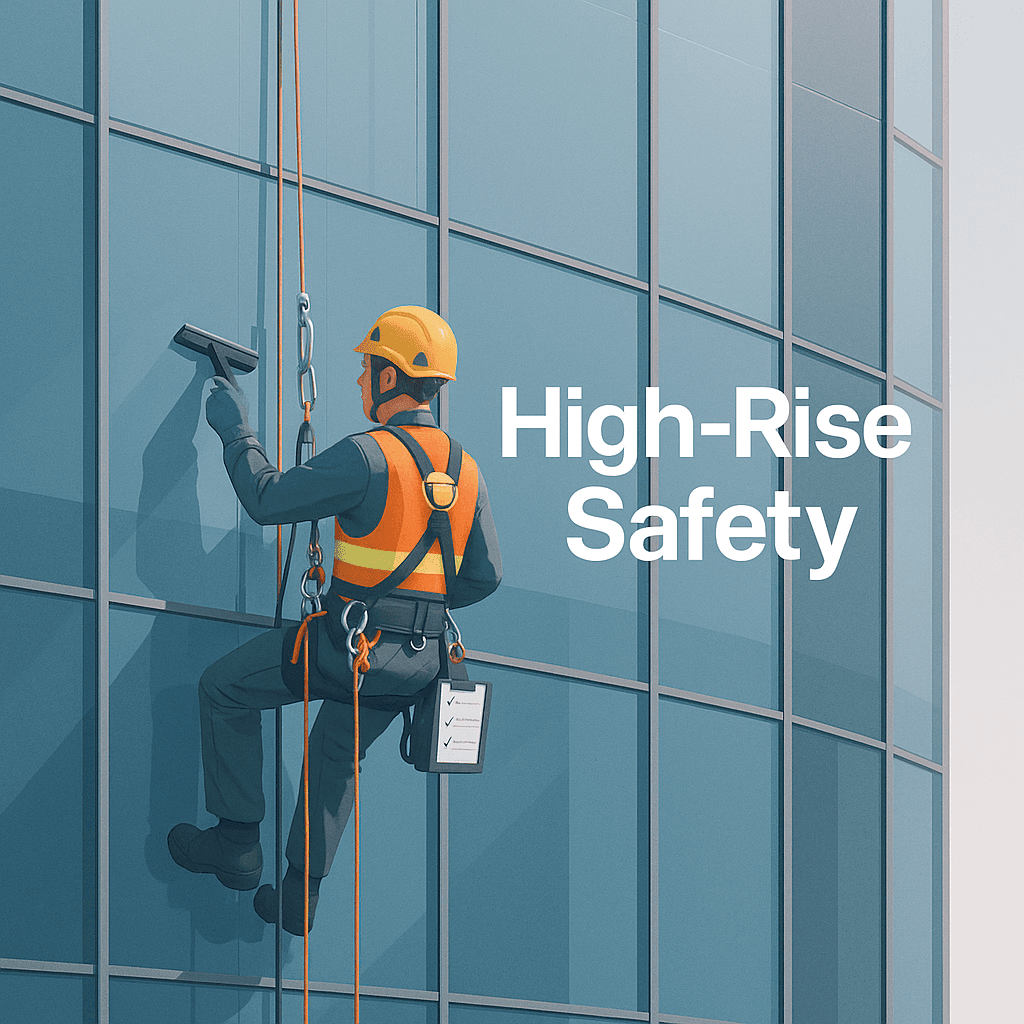
High rise window cleaning looks calm from the sidewalk. A couple of ropes, a person gliding down the glass, maybe a bucket swinging a little. It’s almost… peaceful.
Up close, it’s the opposite. It’s a job built on systems. Redundancy. Checklists. Training. Weather calls that can ruin a whole day. And a lot of boring safety steps that nobody notices, which is kind of the point.
If you’re a property manager, building owner, or even just someone who works in a tower and wonders, how is this not insanely dangerous… this is the real answer.
The first truth: safety is planned before anyone touches the roof
A legit high rise crew does not show up and “figure it out.” Safety starts in the planning stage, and if the planning is sloppy, everything downstream gets sketchy fast.
Usually there’s a pre job walk through or site assessment that covers:
- Roof access and fall protection points
- Parapet height and edge conditions
- Anchor availability and certification status
- Setback distance to glass line
- Building facade type (curtain wall, precast, etc.)
- Drop zones and pedestrian traffic patterns
- Where tools and water will go, and how they get up there
- Wind exposure on different elevations and corners
And yes, sometimes the building itself dictates the method. Some towers are built for rope descent. Others require a swing stage. Some are a mix.
If you’re in Southwest Florida and you’re trying to figure out what’s right for your building, you can always start with a quick quote request and a conversation. That’s basically what we do at Naples Florida Window Cleaning. Not every building needs the same plan.
The main access methods (and what makes them safe)
High rise glass gets cleaned using a few primary systems. Safety management changes depending on the system, but the goal is always the same. Keep the worker attached to a rated support at all times, and keep the public protected below.
1) Rope descent systems (RDS)
This is the classic “person on ropes” method. It’s efficient and flexible, especially on modern glass towers.
Key safety idea: two independent lines.
- One is the working line (main line)
- One is the safety line (backup)
Each line is attached to separate anchors whenever possible. The worker uses:
- A descender device on the working line
- A fall arrest device on the safety line that locks if there’s a sudden drop
Rope systems look simple, but the safety is in the redundancy and the training. The worker is basically running two systems at once, constantly.
2) Suspended scaffolds (swing stage)
This is a platform that hangs from roof rigging and travels up and down.
Safety is managed through:
- Guardrails on the platform
- Lifelines and independent fall arrest for each worker
- Hoist inspections and load limits
- Tie back requirements to prevent platform swing
- Rigging inspections and counterweight rules
It’s slower to set up than rope descent, but it’s sometimes required by the building design or the scope.
3) Boom lifts / aerial lifts (for some “high” work)
Not truly “high rise,” but often used for mid rise commercial buildings or certain access areas.
Safety is mostly about:
- Harness and lanyard use in the basket
- Lift inspection and ground conditions
- Wind limits and overhead hazard checks
4) Water fed pole systems (from ground or roofs)
This one is common for low rise and some mid rise. For towers, it’s used more selectively, like podium levels or setbacks.
The safety advantage is obvious. Less time on ropes. Less time suspended. But it still needs controls, because hoses, wet surfaces, and pedestrian areas can create their own hazards.
Naples Florida Window Cleaning uses purified water systems for a lot of exterior work because it reduces chemical use and helps deliver streak free results. But the method always depends on the site.
Anchors and rigging: the part you never see, and should care about
If you’re hiring a high rise window cleaning company, this is one of the most important questions:
What are they tying into, and who verified it?
Anchors are typically engineered points on the roof, rated for fall arrest and/or rope access loads. They might be:
- Permanent roof anchors
- Davit bases and arms
- Outriggers
- Beam clamps (in specific cases)
- Structural members approved for attachment
Safety management includes:
- Verifying anchor rating and compatibility
- Checking corrosion, damage, loose hardware
- Ensuring proper edge protection so ropes do not cut or abrade
- Using correct knots, connectors, and rigging angles
- Keeping lines separated so one incident doesn’t compromise both
And if anchors are out of date or missing, a good contractor doesn’t “get creative.” They stop and recommend the correct fix, even if it delays the cleaning.
The two big enemies: wind and distractions
People assume height is the main danger. Height matters, sure. But wind and human error are the daily threats.
Wind management
High rise wind is not the same as street level wind. Corners accelerate it. Between buildings it funnels. Thermals off sunlit glass can get weird.
Safety managed wind rules usually include:
- Setting maximum allowable wind speeds for descent or stage work
- Monitoring gusts, not just average wind
- Watching for building specific wind effects (corners, setbacks)
- Stopping work when wind causes uncontrolled swing or line drift
Sometimes that means a crew cleans three drops and then shuts down. Annoying. Also correct.
Distraction management
Window cleaning looks repetitive, so people assume it’s easy to zone out. But on ropes, zoning out is when mistakes happen.
Professional crews manage distractions by:
- Using simple, repeatable procedures
- Doing partner checks before going over edge
- Keeping communication tight and boring
- Limiting loose tools and gear chaos
- Using radios or agreed hand signals when needed
It’s not dramatic. It’s routine. That’s the point.

The “drop zone” below: protecting people who never agreed to be part of this
High rise safety is not only about the worker. It’s also about the public.
A single squeegee, scraper, or small tool dropped from height can be catastrophic, highlighting the importance of managing dropped objects. So professional crews treat the ground like a controlled worksite with strict physical security measures.
Typical controls include:
- Cones and caution tape to create a perimeter
- Spotters or ground crew to redirect foot traffic
- Signage and coordination with building security
- Scheduling work during lower traffic times when possible
- Tool lanyards and closed buckets
- Keeping debris contained (especially for post construction glass)
On busy storefront areas, this planning becomes half the job.
Training and standards: what separates “a guy with ropes” from a real operation
There are formal standards and training systems in rope access and suspended work. Companies that take safety seriously usually have technicians trained under recognized programs and documented procedures.
What you want to hear, in plain language:
- They train people to use the equipment properly
- They document that training
- They have rescue procedures
- They inspect gear regularly and retire it on schedule
- They have insurance appropriate for high rise work
- They follow OSHA requirements and manufacturer guidelines
If a contractor can’t explain their safety process without getting defensive, that’s a red flag. A good company will actually be happy you asked, because it means you’re not shopping on price alone.
Equipment inspections: boring, constant, non negotiable
Safety in high rise cleaning is built on gear. And gear fails when it’s abused, old, damaged, or used wrong.
Common inspection routines include:
- Pre use checks every day (ropes, harnesses, connectors, devices)
- Periodic formal inspections logged by a competent person
- Retiring ropes based on time, wear, shock load, or contamination
- Checking edge protection and rope routing every setup
- Verifying backup devices move freely and lock properly
One small example. If a rope runs over a rough parapet edge without padding, it can get cut. Not instantly, but slowly. And that’s how preventable incidents happen.
So yes, crews fuss over rope protectors and corner pads like their lives depend on it. Because they do.
Rescue planning: the part nobody wants to test in real life
If a technician becomes injured or stuck on rope, you can’t just call 911 and hope for the best. Emergency services may not have immediate rope access capability for your exact building setup.
So professional operators have a rescue plan, which usually includes:
- On site rescue gear
- Trained personnel capable of performing a pick off or lower
- Clear communication steps
- A plan for getting the person to a safe landing zone
- Coordination with building staff and emergency services
Even if it’s never used, the plan has to exist. And crews should be able to explain it without stumbling.
Chemical and water safety: yes, it’s a thing in high rise work
People focus on fall risk, but there are smaller hazards that still matter. Especially on commercial glass.
- Slip risk on wet roof surfaces
- Trip hazards from hose routing
- Chemical exposure from certain stain removers
- Eye protection needs when scraping or using solvents
- Protecting landscaping and runoff zones below
Many professional window cleaning companies now lean toward purified water and biodegradable products where possible, partly because it reduces chemical handling and helps avoid residue. It’s also just better for the building and surrounding environment.
This is a big part of the approach at Naples Florida Window Cleaning, especially for routine maintenance programs. Less harsh chemistry, more controlled process.
Weather in Florida makes the safety plan tighter
Southwest Florida adds its own twist. Heat, humidity, pop up storms, and seasonal wind patterns can change conditions fast.
Safety management often includes:
- Lightning rules. And they should be strict.
- Heat stress controls, hydration, breaks, rotating workers
- Watching glass surface temperature (hot glass changes everything)
- Rain plans for visibility, traction, and electrical hazards around equipment
And then there’s hurricane season, where scheduling becomes its own puzzle. Buildings may also need post storm cleaning, which comes with extra debris hazards.
How to vet a high-rise window cleaning company (quick checklist)
If you’re responsible for a building, you don’t need to become a rope expert. You just need to ask a few questions and listen carefully.
Here are solid, practical questions:
- What access method will you use for this building and why?
- Are your technicians trained for rope access or suspended scaffold work?
- Do you use a two line system for rope descent?
- How do you inspect and verify roof anchors or rigging points?
- What’s your drop zone plan for pedestrians and tenants?
- Do you carry insurance that covers high rise work specifically?
- What’s your weather cutoff for wind and lightning?
- Do you have a written rescue plan and rescue gear on site?
If you want, you can bring these questions to a quote call. We deal with them all the time.
What safety looks like during the actual work day
This part is less glamorous, more real.
A typical safe work flow might look like:
- Crew arrives, checks in with property management/security
- Rooftop setup, anchor checks, rigging installed
- Rope protection placed on edges, lines set and isolated
- Technician does harness and device check, partner checks everything
- Ground crew sets perimeter and signage below
- Radio check, communication plan confirmed
- First descent is slow, testing swing and rope behavior
- Work proceeds drop by drop, adjusting for wind and facade layout
- Periodic breaks, water, and re checks as conditions change
- End of day teardown, gear packed, perimeter removed
Most incidents happen when people rush. Setup and teardown are where the discipline shows.
So… is high-rise window cleaning safe?
It can be. And it usually is, when it’s run like a system and not a stunt.
The safest high rise window cleaning jobs feel almost uneventful. No improvising. No cowboy energy. Just trained people following procedures, double checking anchors, watching the wind, keeping tools tethered, and treating the sidewalk like it matters. Because it does.
If you’re in Naples or surrounding Southwest Florida communities and you need a quote for commercial window washing, including scheduled maintenance or high rise work, you can start here: Naples Florida Window Cleaning. Quick call, quick assessment, and we’ll tell you what method makes sense for your building.
And if you take nothing else from this. Ask about the anchors. Ask about the backup line. Ask about the rescue plan. The right company won’t mind.
FAQs (Frequently Asked Questions)
How is safety planned before starting high rise window cleaning?
Safety in high rise window cleaning begins with thorough planning before anyone accesses the roof. This includes a pre-job walkthrough or site assessment covering roof access, fall protection points, parapet height, anchor availability and certification, setback distances, building facade types, drop zones, pedestrian traffic patterns, tool and water logistics, and wind exposure on different elevations. Proper planning ensures all safety measures are in place to prevent hazards during cleaning.
What are the main access methods used in high rise window cleaning and their safety features?
High rise window cleaning primarily uses four access methods: 1) Rope Descent Systems (RDS) featuring two independent lines—a working line and a safety backup line with descender and fall arrest devices; 2) Suspended Scaffolds (swing stages) equipped with guardrails, lifelines, hoist inspections, tie-back requirements, and rigging inspections; 3) Boom Lifts/Aerial Lifts used for mid-rise buildings with harnesses, lift inspections, and wind checks; 4) Water Fed Pole Systems for low to mid-rise areas reducing time suspended but requiring controls for wet surfaces and pedestrian safety.
Why are anchors and rigging critical in high rise window cleaning?
Anchors and rigging provide the essential support points for workers suspended during high rise window cleaning. They must be engineered, rated for fall arrest or rope loads, and regularly inspected for corrosion or damage. Common types include permanent roof anchors, davit bases, outriggers, beam clamps, or approved structural members. Proper verification of anchor ratings and compatibility is vital to ensure worker safety. Contractors should never use unverified anchors or attempt unsafe fixes.
How does wind affect safety during high rise window cleaning?
Wind is a significant hazard in high rise window cleaning because it can be stronger and more unpredictable at elevation due to funneling between buildings and thermals from sunlit glass. Safety protocols include setting maximum allowable wind speeds for rope descent or scaffold work, monitoring gusts rather than just average wind speeds, and being aware of building-specific wind effects such as accelerated winds at corners. Work may be delayed if wind conditions exceed safe limits.
What training and systems are involved to ensure worker safety on ropes?
Workers using rope descent systems undergo extensive training to manage two independent lines simultaneously—a working line with a descender device and a safety backup line with a fall arrest device that locks during sudden drops. This redundancy requires constant attention to both systems to maintain attachment to rated supports at all times. The training emphasizes proper knot tying, connector use, rigging angles, and emergency procedures to minimize risk.
How do property managers or building owners ensure they hire safe high rise window cleaning services?
Property managers and building owners should inquire about the contractor’s safety planning process including pre-job assessments of roof anchors and rigging equipment certification. They should verify that the company uses redundant safety systems like dual ropes or properly guarded suspended scaffolds. Additionally, asking about how contractors monitor weather conditions such as wind speed is important. Choosing companies that prioritize stopping work when conditions are unsafe rather than improvising ensures higher safety standards.