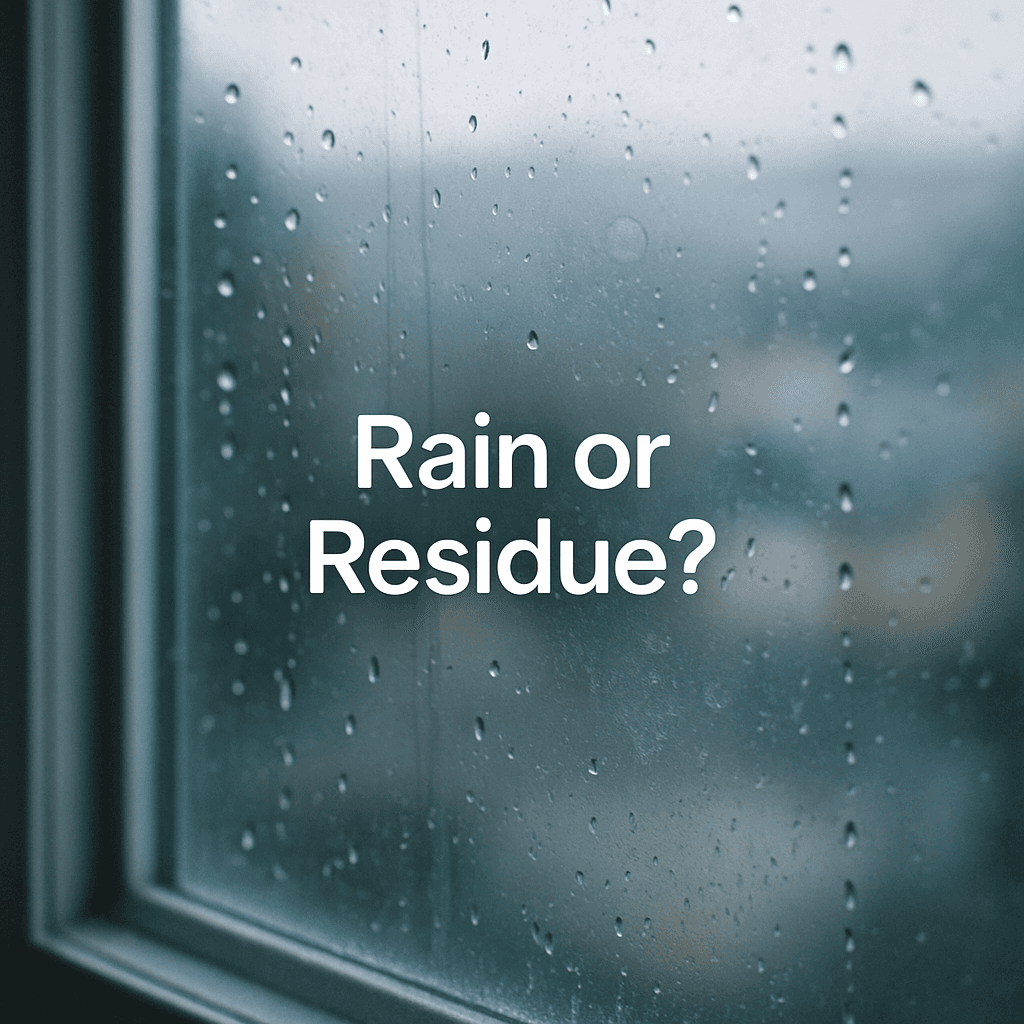
If you have ever looked out after a Florida rain and thought, great. My windows were fine yesterday. Now they look… speckled. Smudged. Like somebody flicked a dirty paintbrush at them.
You are not imagining it.
But also, rain is not always the real culprit. Not directly, anyway.
Because here’s the weird part. Pure rainwater, in a perfect world, should dry pretty clean on glass. No spots. No crusty dots. No hazy film. In reality, the water that hits your windows is usually carrying extra stuff. Or it lands on glass that already has extra stuff on it. Then it dries and leaves you with that classic “rain made my windows dirty” look.
So let’s break down what’s actually happening. What rain can do. What rain exposes. And what you can do so your windows don’t look worse after every storm.
Why rain shouldn’t leave spots, but often does
Rain starts as condensed water vapor. In theory, it’s relatively clean.
Then it falls through air that is… not clean.
And in Naples and Southwest Florida, you’ve got a whole mix floating around:
- Salt and mineral aerosols (especially if you’re closer to the coast)
- Pollen (seasonally intense, and it sticks)
- Dust and sand (wind, construction, landscaping, dry spells)
- Exhaust and general urban grime (even in “nice” areas, it’s still there)
- Smoke residue (brush fires, distant wildfire haze, even BBQ smoke can contribute)
So the rain isn’t necessarily dirty because it formed dirty. It becomes dirty on the way down. And then it hits your glass, grabs whatever is already on the surface, and redistributes it into spots and streaks as it dries.
In other words, rain is often the messenger. Not the villain.
The #1 thing that makes “rain spots” worse: minerals already on the glass
If your windows have mineral deposits on them (even a thin layer you can’t really see yet), rain will make them stand out.
This is especially common in Florida because of hard water sources, irrigation, and sprinkler overspray. Minerals like calcium and magnesium dry into deposits. Over time those deposits can bond to the glass.
So when rain hits:
- It wets the mineral film.
- It partially dissolves and moves it around.
- It dries again, leaving more visible spotting and haze.
And the frustrating part is you can wipe the window and it still looks “dirty.” Because some of that isn’t dirt. It’s etched or bonded mineral residue.
How to tell if it’s hard water staining
Try this simple test on one small area:
- If you clean the glass with regular glass cleaner and a microfiber, and the spots are still there, that’s a clue.
- If the spots look like little rings or crusty dots, also a clue.
- If the spots appear worse in the areas where sprinklers can reach, big clue.
Hard water stains often need a specific removal process, not just “clean harder.”
Sprinklers. Always sprinklers. (Well, not always. But often.)
A lot of people blame rain when the real timeline is:
- Sprinklers run early morning or at night.
- Water hits the windows and dries in the sun.
- Minerals bake on.
- Then it rains later and reactivates the residue and spreads it.
If you have irrigation near the house, especially aimed a little too high, it can absolutely destroy the look of your exterior glass over time.
Quick signs your sprinklers are involved:
- Spots are heavier on the lower portion of windows.
- One side of the house is worse than the other (the sprinkler side).
- You see spotting on nearby outdoor lights, stucco, or painted trim too.
Rain just makes it more visible.
Screen bleeding: the sneaky cause nobody thinks about
This one surprises homeowners.
Your window screens can hold a lot of fine dust, pollen, and even a slightly greasy film. Then rain hits the screen first. Water runs through it, picks up that grime, and then drips onto your glass.
Result: streaks or drip lines that look like “dirty rain.”
This is super common when screens haven’t been cleaned in a while. Especially after a dry season when screens collect dust, then the first big rain basically rinses all of it right onto the window. If you notice streaks starting near the top of the window and running down in thin lines, screens might be part of the problem.
Screen cleaning is one of those unglamorous services that makes a massive difference.
Pollen: it’s not just yellow dust on your car
Pollen sticks to glass. It also sticks to frames, sills, and screens. Then rain turns it into a thin paste.
Sometimes you’ll see:
- A light greenish or yellowish haze
- Tiny specks everywhere, not just in drip lines
- Smears when you try to wipe it dry (because it’s sticky)
During heavy pollen weeks, even freshly cleaned windows can look “not fresh” faster. It doesn’t mean the cleaning was bad. It means pollen is relentless.
Coastal air and salt film: the constant invisible layer
If you are closer to the Gulf, you get salt in the air. You may not taste it every day, but your windows feel it.
Salt residue can:
- Attract moisture
- Hold onto dust
- Create a haze that’s hard to wipe without leaving streaks
- Make rain spotting more noticeable
This is why some homes near the water need more frequent exterior window cleaning, even when it feels like “nothing happened.” The air happened.
Construction dust and drywall powder: rain just reveals it
Naples has a lot of building and remodeling. Even if it’s not your house, nearby work can put fine dust in the air.
Construction dust is extra annoying because it’s so fine it settles into:
- Screen mesh
- Track corners
- Frame edges
- The tiny texture on some glass coatings
Then rain hits, turns that dust into muddy spotting, and suddenly your windows look like you haven’t cleaned them in a year.
“But my windows were cleaned recently…” yeah, and that can still happen
If a window was cleaned well, rain usually won’t destroy it overnight.
But a few things can make rain mess it up anyway:
- Screens were not cleaned, so the next rain rinses screen grime onto the glass
- Tracks and sills were full of debris, so rainwater carries it upward or splashes it
- Sprinklers are depositing minerals daily, and the window is slowly being re-spotted
- Existing hard water stains were not removed (cleaning and stain removal are not the same service)
This is why a lot of professional window cleaning companies separate “standard window washing” from “hard water stain removal.” Different tools, different chemistry, different time requirement.
What you can do right now (without turning it into a whole weekend project)
1) Watch how water behaves on the glass
After a rain, does the water sheet off cleanly or does it bead and dry into dots?
- Sheeting tends to dry cleaner.
- Beading can look nice in the moment, but it often dries into spots if minerals are present.
Either way, if you see consistent dots, it’s usually minerals plus evaporation.
2) Check for sprinkler overspray
Run your irrigation system and literally watch where the water goes. If it hits glass, adjust it. Even a small amount, repeated, is enough to build staining.
3) Rinse, don’t wipe, if you can
If you’re trying to “fix” rain spots with a dry rag, you often just smear the minerals and pollen around.
A gentle rinse with clean water can help short term. But if it’s hard water staining, rinsing won’t solve the bonding.
4) Clean screens and tracks, not just glass
A lot of “dirty window” complaints are really “dirty edges” issues. Tracks and sills hold gunk. Rain splashes it. You see it as streaking or grime lines.
When it’s time to call a pro (and what to ask for)
If you’re dealing with any of these, it’s probably not a DIY situation anymore:
- Spots that don’t come off with normal glass cleaner
- White crusty deposits around edges
- Hazy film that returns fast
- Salt film near the coast that won’t wipe clean without streaking
- Screen drip lines that keep coming back
What you want is a company that does more than just quick wipe-downs. Specifically:
- Purified water systems for cleaner drying (less spotting)
- Proper screen cleaning
- Track and sill cleaning so runoff isn’t dragging dirt back onto the glass
- Hard water stain removal when needed, not just “regular wash”
If you’re in Naples or nearby, Naples Florida Window Cleaning offers residential and commercial window washing with purified water, plus add-ons like screen cleaning, track and sill cleaning, and hard water stain removal. If your windows keep looking worse after rain, it’s worth getting a quote and having someone identify what’s actually on the glass.
A realistic maintenance rhythm for Southwest Florida (so rain isn’t a constant headache)
There’s no universal schedule, but here’s a very real-world guideline:
- Most homes inland: exterior window cleaning every 3 to 6 months
- Coastal homes or heavy sprinkler exposure: every 2 to 3 months
- Storefronts/commercial glass: often monthly or biweekly depending on traffic and visibility
If you wait until the glass looks terrible, hard water staining has more time to bond. Then it becomes a restoration job, not a cleaning job. More time, more cost, more frustration.
Keeping it on a simple schedule is usually cheaper in the long run.
Images (add these in your post)
Here are a few relevant images you can insert throughout the article.
Rain spots and mineral deposits close-up
Window cleaning tools in use (squeegee on glass)
Exterior home windows in Florida style home

Dirty window screen mesh close-up
So, is rain making your windows dirty?
Sometimes, yes. But more often it’s this:
- Rain + minerals already on the glass
- Rain + sprinkler overspray residue
- Rain + dirty screens bleeding onto the window
- Rain + pollen and coastal salt film
Rain just makes the evidence show up all at once.
If you want the simplest next step, it’s this: get the screens and tracks cleaned along with the glass, and address any hard water staining before it turns permanent. And if you’d rather not guess, you can reach out to Naples Florida Window Cleaning for a quick quote and a straight answer on what’s actually causing the spotting on your windows.
FAQs (Frequently Asked Questions)
Why do my windows look speckled and smudged after a Florida rain?
Your windows appear speckled and smudged after rain because the rainwater picks up various particles like salt, pollen, dust, and urban grime as it falls through the air. When this water lands on your glass, especially if it already has minerals or dirt on it, it dries and leaves behind spots, streaks, or a hazy film that make your windows look dirty.
Shouldn’t pure rainwater dry clean on my windows without leaving spots?
In an ideal world, yes. Pure rainwater starts relatively clean and should dry without leaving spots. However, as rain falls through the atmosphere, it collects salts, minerals, pollen, dust, smoke residue, and other airborne particles. These contaminants cause the rain to leave visible spots and streaks when it dries on your windows.
How do mineral deposits from hard water affect my window cleanliness after rain?
Mineral deposits like calcium and magnesium from hard water sources can form thin layers on your glass that are often invisible until rain activates them. When rain wets these mineral films, it partially dissolves and redistributes them across the glass surface. As the water dries again, these minerals leave behind more pronounced spotting and haze that regular cleaning may not remove easily.
Can sprinklers contribute to my window spotting problems?
Absolutely. Sprinklers often spray water containing minerals onto your windows. When this water dries in sunlight before a rainfall, minerals bake onto the glass forming stubborn deposits. Subsequent rains then reactivate and spread these residues causing worse spotting. Signs include heavier spots on lower window portions or one side of the house where sprinklers are positioned.
What is screen bleeding and how does it affect window cleanliness after rain?
Screen bleeding occurs when dirty window screens collect dust, pollen, and greasy films over time. Rainwater passing through these screens picks up grime and drips onto your glass below, leaving streaks or drip lines that mimic dirty rain spots. This problem is common after dry seasons when screens haven’t been cleaned for a while.
How does pollen impact the appearance of my windows during rainy seasons?
Pollen sticks not only to glass but also to frames, sills, and screens. When rain comes along, it mixes with this pollen turning it into a sticky paste that causes light greenish or yellowish haze and tiny specks across your windows. These deposits smear when wiped dry making freshly cleaned windows look less than fresh during heavy pollen weeks.