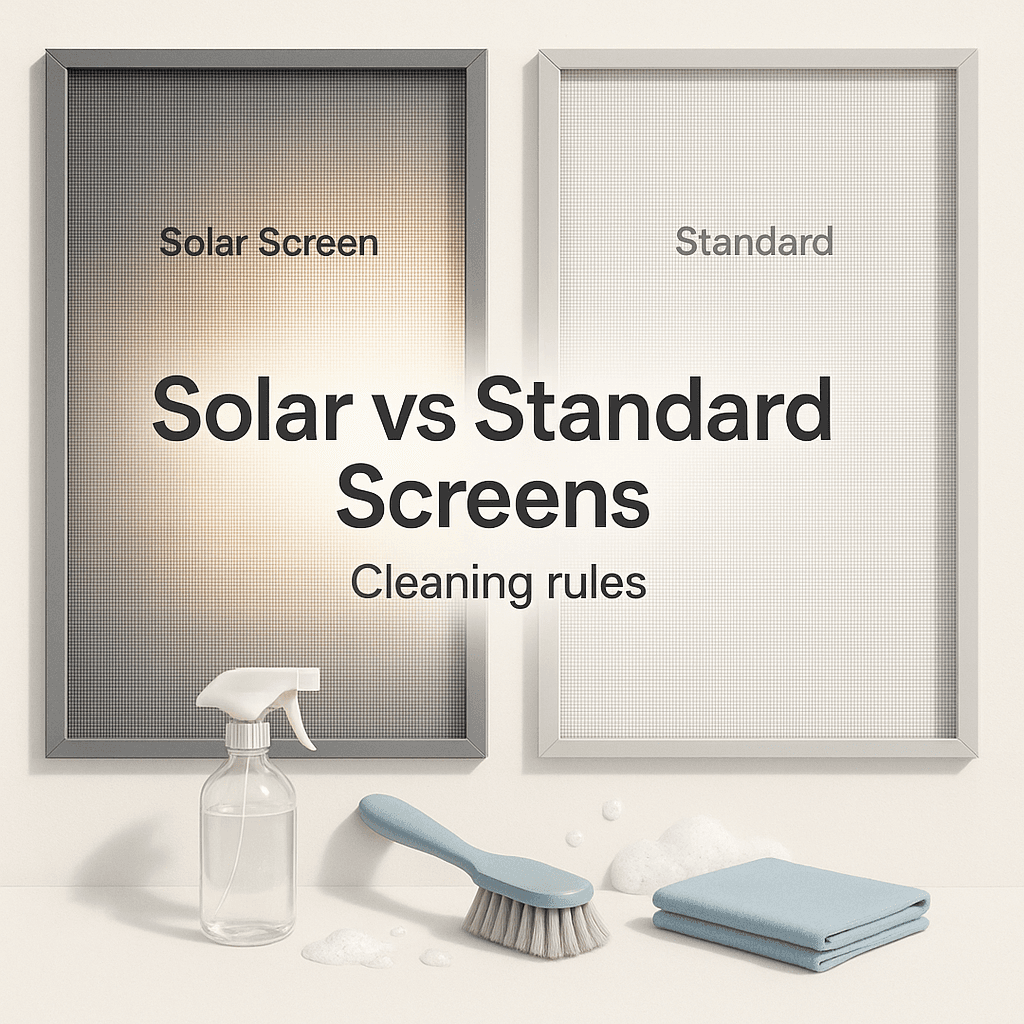
If you have screens on your windows, you already know this annoying truth.
You can clean the glass until it looks perfect, step back feeling proud… and then the light hits the screen and you see it. Dust. Pollen. Salt film. Little gray patches that make the whole window look “kinda dirty” again.
Now add solar screens into the mix and it gets even more confusing, because they do not behave like standard fiberglass screens. They are tougher in some ways, more delicate in others, and if you clean them like regular screens you can shorten their life without meaning to.
So let’s clear it up. What solar screens are, how they differ from standard screens, and the cleaning rules that actually matter.
What solar screens actually are (and why they get gross in a different way)
Standard screens are usually fiberglass mesh in a frame. Pretty flexible, pretty forgiving. They catch bugs and leaves and random debris. Most of what builds up is dry dust, spider webs, pollen. Stuff that sits on the surface.
Solar screens are more like a “sun control fabric.” Many are made from vinyl coated polyester and they can be darker, denser, and designed to block a percentage of heat and UV. You will hear numbers like 80 percent, 90 percent, sometimes higher. That “block” is the whole point. Less glare, less heat, more privacy during the day.
But that tighter weave and coating also means grime can cling differently. In Southwest Florida, there’s also salt in the air, humidity, and frequent rain that dries in weird patterns. Solar screens can end up with a slightly sticky film over time that standard screens don’t always hold onto as much.
And the big thing. Solar screens are part performance product. You are not just cleaning “a screen.” You’re cleaning something that is supposed to keep doing a job.
The quick comparison (so you know what rules apply)
Here’s the simple breakdown.
Standard screens (fiberglass):
- More flexible and more forgiving
- Can handle a bit more scrubbing pressure
- Easier to rinse fully clean
- More likely to stretch or bow if handled roughly
Solar screens (vinyl coated, tighter weave):
- Stronger mesh, but the coating can be damaged by harsh chemicals
- Easier to get “clean looking” but harder to fully rinse if you soap them heavily
- More likely to show streaky drying or blotches if not rinsed properly
- More expensive to replace, so mistakes hurt more
So yes, they both get dirty. But no, they don’t have the same cleaning rules.

Rule 1: Avoid harsh chemicals, especially on solar screens
This is where people mess up. They grab a strong degreaser, bleach mix, or a “whatever is under the sink” cleaner and go to town.
It might look clean at first. Then later you notice:
- the screen looks faded
- the surface looks patchy
- it seems to attract more dust later
- the mesh feels brittle
Solar screens can have coatings that do not love harsh chemicals. Standard fiberglass screens also do not benefit from strong chemicals, but they typically won’t show the damage as quickly.
Safe default for both types:
- mild soap (think a few drops of dish soap in a bucket)
- soft brush or microfiber
- lots of clean water to rinse
If you’re in Naples or near the coast and dealing with salt haze, you may need more rinsing than you think. The rinse is where the “clean” actually happens.
Rule 2: Pressure is not your friend (and a pressure washer is usually overkill)
Can you pressure wash a screen? People do. Sometimes it works. Sometimes it blows the spline loose, bends the frame, stretches the mesh, or forces grime deeper into corners.
For standard screens, high pressure can deform the mesh or pop it out of the frame, especially on older screens that have dried out.
For solar screens, pressure can cause:
- coating wear
- fraying at edges
- loosened mesh tension
- frame damage if you get too close
If you absolutely insist on using a sprayer, use the gentlest setting, stand back, and test a small corner first. Better yet, don’t. A controlled rinse with a hose nozzle and a soft brush is safer and usually cleans better anyway.
Rule 3: Brush choice matters more than people think
A stiff brush feels satisfying. Like you’re really doing something. But stiffness can be a problem.
Use:
- soft bristle brush
- microfiber cloth
- soft car wash style brush
Avoid:
- wire brushes
- abrasive pads
- anything that feels like it could scratch paint
On solar screens, a too stiff brush can scuff the coated strands. You may not see it right away, but it can create a dull look and make the screen trap grime faster later.
Rule 4: Do not “soak forever” unless you can rinse completely
Soaking screens can help loosen pollen and dust, sure. But a long soak with soap can also leave residue in a tighter weave.
Standard screens rinse easier. Solar screens, because of density, can hold suds longer. Then you reinstall and as it dries you get those odd blotches.
If you soak, keep it simple:
- Rinse dry debris off first
- Quick wash with mild soapy water
- Thorough rinse until water runs clean
If you cannot rinse thoroughly, you’re basically just moving dirt around.
Rule 5: Clean screens before the glass (yes, really)
This sounds small, but it changes your results.
If you clean your windows first and then mess with screens, you’ll shake dust and debris onto freshly cleaned glass. That’s how you end up with “why are there specks again?” an hour later.
Better order:
- Screens
- Frames, tracks, sills (at least a quick wipe)
- Then the glass
Professional crews do it this way for a reason. It keeps the final look sharp.

Rule 6: Sun and heat can ruin your drying results
In Florida, this one matters.
Cleaning screens in direct sun can make them dry too fast, which can lock in soap residue or mineral spots, especially if your water is hard. Solar screens are extra noticeable here because the darker mesh shows uneven drying more.
If possible:
- clean early morning or late afternoon
- work in the shade
- rinse well, and do a final gentle rinse
If you’re using tap water and your area has harder water, spotting can show up more over time. Many professional window cleaners use purified water systems for a reason. It reduces mineral residue and helps everything dry cleaner.
(That’s also part of what we use at Naples Florida Window Cleaning when the job calls for it. Especially on exteriors where spotting is the whole battle.)
Rule 7: Know when “good enough” is actually the right goal
This is a weird one but it’s honest.
Screens live outside. They catch everything. Trying to make them look brand new, like showroom perfect, can lead to over scrubbing and damage. Especially with solar screens, where you’re paying for performance and longevity.
A properly cleaned screen should:
- look evenly clean when viewed straight on
- not feel sticky or dusty to the touch
- not have visible heavy buildup in corners or along the bottom rail
If you’re chasing microscopic perfection, you might start using aggressive tools and that’s where problems begin.
How to clean standard screens (simple method that works)
Here’s a safe process that won’t wreck anything.
Step 1: Remove and label
If you have a bunch of similar screens, label them with painter’s tape. Saves time later. Also helps if one frame is slightly warped and only fits one window.
Step 2: Dry brush or vacuum first
Quick pass to remove loose dust and webs. This prevents turning dust into muddy paste when you add water.
Step 3: Gentle wash
Bucket of water with a small amount of mild dish soap. Soft brush, light pressure. Both sides.
Step 4: Thorough rinse
Hose rinse, not a blasting. Keep rinsing until the water sheets cleanly.
Step 5: Dry
Shake off excess. Air dry in shade. Don’t lean them in dirt or against something rusty.
That’s it. Simple. Boring. Works.
How to clean solar screens (same idea, tighter rules)
Solar screens get basically the same process, but with extra care around chemicals and pressure.
Step 1: Rinse first, longer than you think
Let water do the work. A longer rinse loosens salt, dust, and pollen without you scrubbing aggressively.
Step 2: Use minimal soap
If you over soap a dense mesh, you’ll spend forever rinsing. Keep soap light.
Step 3: Soft brush only, no grinding
Let the brush glide. If you feel like you need to “dig in,” stop and rinse again. Most buildup is surface level, it just needs time and water.
Step 4: Final rinse, then inspect at an angle
Look from the side. Solar screens can look clean head on but still have residue.
Step 5: Dry in shade
Direct sun drying can show streaking more on solar material. Shade helps.
What not to do (common mistakes I see all the time)
A quick list, because these are the ones that lead to replacements.
- Using bleach or strong cleaners because “it’s outside so it must need it”
- Pressure washing up close and warping the frame
- Scrubbing with abrasive pads and scratching the coating
- Reinstalling while dripping wet so dirt in the track sticks to the frame
- Cleaning only one side (screens have two sides, and both collect film)
- Ignoring the tracks and sills then blaming the glass for looking dirty later
How often should you clean each type?
This depends on location and landscaping. In Naples and surrounding Southwest Florida, the combo of pollen, humidity, rain, and coastal air means screens get dirty faster than people expect.
A decent rule of thumb:
- Standard screens: every 6 to 12 months
- Solar screens: every 6 to 12 months, but inspect more often if you’re near the coast or have sprinklers hitting the windows
If you have irrigation overspray, that’s another layer. Minerals can crust onto frames and lower screen edges. That is when a “simple rinse” stops being enough.
A quick note about sprinklers, hard water, and why screens start looking stained
Sometimes what you think is “dirty screen” is actually mineral deposits from irrigation water drying repeatedly on the mesh and frame. This can make the bottom portion look lighter, crusty, or permanently dusty.
Solar screens can hide glare, but they do not hide mineral buildup. If anything, it becomes more obvious because the screen is darker and denser.
In cases like that, you want a careful approach. Not aggressive scrubbing. And definitely not random chemicals.
If you suspect hard water staining on the glass too, that’s its own category and usually needs specialty removal methods. It’s not the same as basic window cleaning.
When it makes sense to hire it out (and what to ask)
Cleaning screens is one of those tasks that seems easy until you do it for 14 windows, in humidity, while trying not to bend anything. Also, a lot of screens are on second stories, or tucked behind landscaping, or just awkward.
If you’re hiring a company, ask:
- Do you remove screens and clean both sides?
- Do you rinse thoroughly and avoid harsh chemicals?
- Do you clean tracks and sills too, or is that separate?
- Can you handle solar screens specifically?
If you’re in the Naples area, Naples Florida Window Cleaning does screen cleaning as part of a complete window service approach, with trained and insured technicians and methods that keep things streak free. You can request a quote right from the site and stop thinking about it.
The real takeaway
Standard screens and solar screens can both look fine from inside, until they don’t. And once they look bad, most people either ignore them or accidentally clean them the wrong way.
So remember the core rules:
- Keep chemicals mild
- Avoid heavy pressure
- Use soft brushes
- Rinse more than you scrub
- Dry in shade when possible
- Clean screens before glass
Do that, and both types of screens will last longer, look better, and your “clean windows” will finally look clean all the way through.
FAQs (Frequently Asked Questions)
What are solar screens and how do they differ from standard fiberglass window screens?
Solar screens are made from vinyl coated polyester with a tighter, denser weave designed to block heat and UV rays—often blocking 80-90% or more. Unlike standard fiberglass mesh screens, which are flexible and catch mostly dry dust and debris, solar screens function as sun control fabric offering less glare, more privacy, and heat reduction. Their coating and tighter weave mean grime clings differently, often resulting in a sticky film especially in humid or salty coastal environments.
Why do solar screens get dirty differently compared to standard fiberglass screens?
Due to their vinyl coating and tighter mesh, solar screens tend to attract a sticky film of grime including dust, pollen, salt haze, and humidity residues that can build up over time. Coastal environments with salt air and frequent rain contribute to unique drying patterns and sticky deposits that standard fiberglass screens—which mostly collect dry dust and spider webs—don’t usually experience.
What cleaning methods should I avoid when maintaining solar window screens?
Avoid using harsh chemicals like strong degreasers, bleach mixes, or household cleaners under the sink on solar screens. These can damage the screen’s coating causing fading, patchiness, brittleness, and increased dust attraction. Also avoid pressure washers or high-pressure sprayers as they can wear coatings, fray edges, loosen mesh tension, or damage frames. Use mild soap solutions with soft brushes instead.
How should I properly clean solar and standard window screens without damaging them?
Use a mild soap solution (a few drops of dish soap in water), a soft bristle brush or microfiber cloth for gentle scrubbing, and plenty of clean water for thorough rinsing. Avoid stiff wire brushes or abrasive pads that can scratch or dull the screen surface. For rinsing, a gentle hose spray is best rather than pressure washers to prevent damage.
Is it okay to soak solar screens for long periods during cleaning?
Soaking can help loosen pollen and grime but only if you can rinse the screen completely afterward. Incomplete rinsing after soaking may leave soap residue that causes streaks or blotches on solar screens. Always ensure thorough rinsing to maintain the performance and appearance of your solar screens.
Can I use a pressure washer to clean my window screens safely?
Generally no. Pressure washers often produce too much force which can deform standard fiberglass mesh by stretching or popping it out of frames. For solar screens, pressure washing risks coating wear, fraying at edges, loosening mesh tension, and frame damage. If you must use one, choose the gentlest setting, stand back far away from the screen, and test on a small inconspicuous area first—but using a soft brush with gentle hose rinsing is safer and more effective.