
Water Spot & Stain Prevention Treatments. Stop Spots Before They Start.
Protect Naples FL windows from future hard water and mineral damage. Hydrophobic barrier treatment applied after cleaning.
Accept the Mission → ☎ (239) 371-7343
How It Works
The treatment creates a hydrophobic barrier on the glass surface. Water beads up and runs off instead of sitting on the glass and evaporating — which is what causes mineral deposits. Applied after a full clean, the treatment extends time between cleanings and prevents staining.
Treatment is recommended for any Naples property with irrigation hitting the glass or significant Gulf salt air exposure. It significantly reduces the frequency of hard water stain removal treatments needed.
Who Benefits Most
Homeowners with irrigation systems that hit windows, waterfront properties with heavy salt air exposure, and anyone who has dealt with recurring hard water staining. The treatment is most effective when applied to clean glass immediately after a professional clean.
The gadgets for this mission
Every agent leaves headquarters with the same kit. Here’s the spy version, and the real tool doing the work.
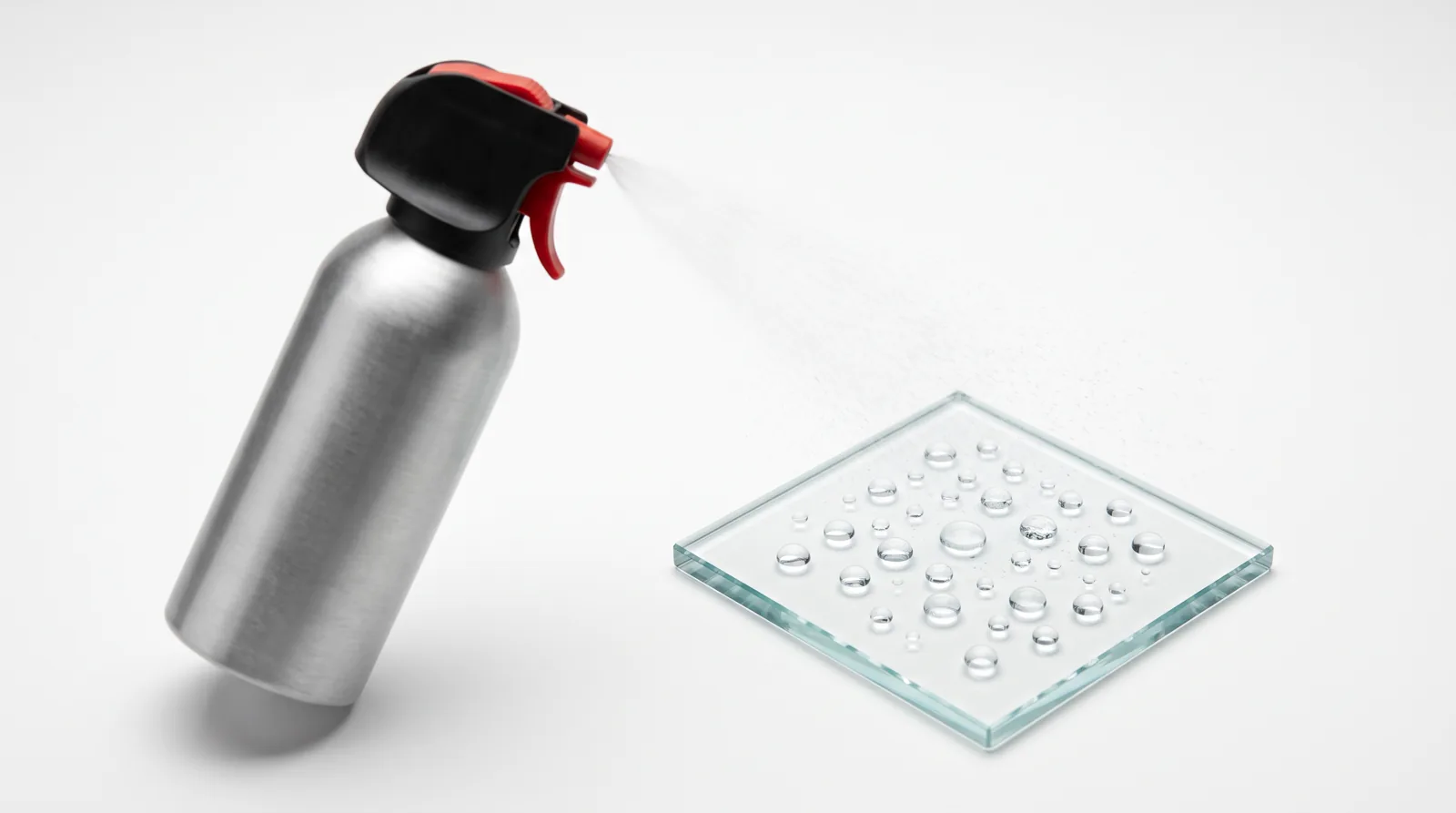
Shield Spray
A classified coating that makes glass repel water. Sprinklers fire, droplets bead up and roll right off.
Real-world versionA hydrophobic glass treatment applied after cleaning. Water beads and sheets off instead of drying into new mineral spots.

Mineral-Scan Specs
One glance through the HUD tells you whether a white spot is fresh mineral or permanent etching. The vial takes care of the rest.
Real-world versionWe test a small area first to tell surface mineral deposits from etched glass, then use a mineral-dissolving treatment made for glass, not a scouring pad.

Streak-Spotter Lenses
Contact lenses that light up red the moment they detect a streak. Our agents refuse to leave a property while anything is still glowing.
Real-world versionA final walk-through with a raking light held at an angle to the glass, which shows any streak or haze before we pack up.
Spot prevention, explained for Naples glass
A water spot prevention treatment is a thin, clear water-repellent layer bonded to freshly cleaned exterior glass. It does not make windows self-cleaning and it does not erase damage that is already there. What it does is shorten the time water sits on the pane, so fewer minerals are left behind each time a sprinkler, a storm or the morning dew dries off.
Where the spots actually come from
Every drop that lands on a window carries something dissolved in it. Rain is fairly clean. Irrigation water is not: many Collier and Lee County sprinkler systems draw on private wells or reclaimed water, which can carry calcium, magnesium, iron and other minerals. When a drop dries in the sun, the water leaves and the minerals stay, in a small white ring. One ring is easy to wipe. Hundreds of rings, baked on through a summer of daily watering, start to bond to the surface of the glass and stop responding to ordinary cleaning.
Near the Gulf, Naples Bay and the canals, there is a second source. Wind lifts fine salt spray inland and it settles on the glass as a hazy film. Morning humidity dissolves it, the afternoon sun dries it again, and the cycle repeats every day. Salt film on its own is cleanable, but mixed with mineral spotting it makes glass look cloudy from inside even after a wipe.
What the barrier changes
Untreated glass lets water spread into a flat sheet that dries slowly and evenly, leaving its minerals across the whole wet area. Treated glass pushes water into tight beads that roll off when the pane tilts, the wind blows or more water hits them. Less water sits on the window, it sits for less time, and less residue is left when it dries. The treatment is not a magic shield. If a sprinkler head hits the same pane ten minutes a day, the coating slows the buildup and makes it easier to remove; it does not make the problem go away.
Glass we treat, and glass we leave alone
- Standard exterior panes on single-hung, horizontal slider and fixed picture windows are the usual candidates, especially on the side of the house facing the irrigation.
- Impact-rated windows and sliding doors, common across newer Naples construction, have an ordinary glass surface on the outside of the laminated unit, so they can be treated the same way.
- Glass rails and shower-style lanai panels often benefit most, because they sit low and catch sprinkler and pool splash all day.
- Self-cleaning coated glass is a different product that works by spreading water into a sheet, the opposite of beading. A water-repellent layer on top can defeat it, so we check before treating any glass a builder or window supplier described as self-cleaning.
- Window film belongs on the inside face of the glass. Prevention treatment goes on the outside only and is never applied over tint or security film.
Why the glass has to be spotless first
The barrier bonds to whatever it touches. If old mineral deposits are still on the pane, the coating seals them in and you look through them until the treatment wears off. That is why prevention is applied right after a full cleaning, and on badly spotted windows only after a hard water stain removal visit. The order on the day is: clean, inspect each pane in good light, remove any remaining deposits, dry the glass completely, then apply and buff the treatment.
Spotting versus etching
Some “spots” are no longer sitting on the glass at all. Years of mineral contact, especially on the irrigation side of a home, can roughen the surface itself. That damage is called etching. It looks like a frosted patch that stays cloudy even when the window is wet, and no cleaner or coating will make it clear again. A coated etched pane will look better than an uncoated one, because water no longer lingers in the rough spots, but the frosting remains. We point out etched glass during the inspection rather than promise a result we cannot deliver.
How long it lasts
No glass treatment is permanent. How quickly it wears depends on what the pane faces: direct sprinkler spray, beach-side salt, rough cleaning with abrasive pads, and constant sun all shorten its life. Glass under a deep lanai overhang keeps its beading much longer than a west-facing picture window in the irrigation zone. The simplest check is the one you can do yourself. Spray a little water on the outside of the glass. Tight, round beads mean the barrier is working. Water that spreads flat means it is time to reapply, ideally at the next scheduled cleaning so the glass is already prepared.
Fix the water source too
Treatment works best alongside a few simple changes around the house:
- Turn or lower sprinkler heads that throw water onto windows and doors. A quarter turn often solves most of the problem.
- Run irrigation early in the morning, so spots do not bake on in the midday sun.
- If the house sits on a well, ask your irrigation contractor about the filter and whether iron staining is showing on walls and walks as well as glass.
- After a storm with heavy salt spray, a plain fresh-water rinse of the lower windows from a garden hose helps, as long as you let it run off rather than leaving puddled drops to dry.
Caring for treated glass
Treated windows clean more easily, but the barrier can be scrubbed off. Between visits, use plain water or a mild, non-abrasive glass cleaner and a soft microfiber cloth. Skip scouring pads, razor blades, powdered cleansers and anything sold to remove rust or lime, all of which strip the coating. If you use a professional crew for regular visits, make sure they know which panes are treated.
Questions to ask before you book any treatment
- Will the glass be fully cleaned and de-spotted before the product goes on?
- Which panes will be treated, and which will not, and why?
- Is the product safe on my window type, frame finish and any nearby screens or seals?
- How will I know when it needs to be reapplied?
We answer those four questions in writing on the quote, so you know exactly which windows are covered before the visit starts.
Streaks? Disavowed.
If a single pane isn’t right, call us and we come back at no charge. No conditions, no arguments.
Ask About Prevention Treatment. Add It to Any Clean.
Call or text to add prevention treatment to your next window cleaning.
The Impossible Mess Force, step by step.
Briefing
Call, text or send the form. We reply within the hour during business hours with questions or a quote.
Recon
We confirm window count, access, hard water and any high or specialty glass, then lock in a firm price.
Execution
Glass, screens, tracks and sills cleaned. Gate access, HOA paperwork and furniture protection handled.
Debrief
We walk the job with you. Anything not spotless gets redone on the spot, or we come back free.
Pair it with
Frequently asked questions
How does the water spot prevention treatment work?
After cleaning we apply a hydrophobic barrier to the glass. Water beads up and runs off instead of sitting and drying into mineral spots.
Who benefits most from the treatment?
Homes where irrigation hits the glass, golf course homes, and waterfront homes exposed to salt spray, which are the places spots come back fastest.
Does it replace regular cleaning?
No. It makes glass stay clean longer and makes each cleaning easier, but salt, pollen and dust still settle on the surface.
Naples, Bonita Springs, Estero and Marco Island.
Accept the mission.
We’ll handle the glass.
Free on-site estimate, firm price up front, and a streak-free guarantee on every pane.
Request a Free Estimate → ☎ (239) 371-7343